Sovereign credit has been very much in the spotlight, be it Greece or the others.
Could Italy be the next to be caught in the crossfire?
The longer term argument for sovereign bonds remains the delicate balance between deflationary and inflationary pressures on the one hand, and the tug of war between large supply coming and possible increase in domestic demand as baby boomers, among other investors disappointed by equity, shift to income and buy government bonds.
We have been bearish on UK gilts for a long time, flattish on US treasuries, and warned not to be short german bunds. At the moment even the bunds could be at risk though, at least for a short while.
The concern we are divining from the rumblings and the gossips comes from the focus on the swaps that were used by Greece to hide its real public debt. From there it is a small step is now to move onto looking at all the swaps that Italy did in the 90's with similar aims.
Up to now Italy has been considered relatively safe from a sovereign point of view: the deficit is not too bad (though the overall debt is). The spread between its bonds and the German ones is comparable, or even lower, than the UK one.
If concerns arise on the veracity of public accounts, including local authorities, it won't be pretty.
Even if there is no substance to those concerns, even if the current numbers are reliable, it won't be pretty.
The chance of the rumours growing and spreading, and acquiring weight, are maybe slim. But it is worthwhile to be careful.
See the FT, Risk magazine, and the Economist for details.
Friday, 19 February 2010
Thursday, 4 February 2010
Oil and Patriots
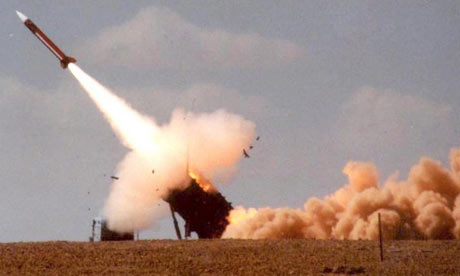
News of a defensive buildup on the southern shores of the Gulf are coming in, together with Obama stating that they can't really stop Iran from making nukes if they really really wanted to.
Not surprisingly oil has been slowly drifting up, though the unexpected inventory buildup in the USA is putting a dampener on that.
The haruspices closed their spread trade, and are wondering on the next stage for petroleum.
Overall, we suspect the current round of news is not enough to keep oil on the boil. The weakness in the global economy and the news from China are negatives.
But some much more dramatic news could hit the tape any time. So with december oil futures at 80~, it is not enough to take a position (apart from the usual lottery tickets - long calls at very high strike prices).
Let's wait a bit more.
Friday, 22 January 2010
Volcker is back.
So the day after the Mass. debacle, Obama finally gets it. There is only one really popular and populist trend, and it is to bash the banker.
It also happens that as well as being popular and populist, it is also very much the right thing to do.
One just has to hope that they do it right.
Volcker being on board is some consolation.
It also probably means, finally, the end of Geitner and co's. One wonders how long Bernanke can last: though his position is stronger, being less cosy to the banks, and intellectually sounder.
It beggars belief how long it has taken Obama to apprise the situation.
When Rahm said "a crisis is a terrible thing to waste", when Obama reminded the CEO's that he was the only thing between them and the pitchforks... one hoped that he understood that he had a golden opportunity to reform the financial system.
Oh well.
Hopefully he'll get to it now.
Hopefully this won't be just a re-introduction of Glass Steagall, but a strengthening and rationalization, a Glass Steagall squared.
Splitting financial institutions by function is necessary, but not sufficient.
Not just commercial and broker/dealer. Why not hiving off the settlement/payment/clearing functions completely, and treat them as a fully guaranteed utility? they are as important to our economy as electricity generation. Lending could be separated from the advisory function of investment banking. Et cetera: there is more than one way to skin a banker.
Of course, as well as reducing the risk of a full economy blowup caused by the banks as in 2008, this will severely reduce the profit generation ability of the financial sector in the boom times. That is a price worth paying, and additionally it also implies that the "boom" will be less bubbly as well.
What else needs to be done?
Limits on the size of risk and balance sheets.
Prudential and countercyclical regulation (and maybe a bit of training for the regulators, so that they have a chance of not getting outsmarted by the bankers).
Clear rules against bailouts of risk-taking institutions, clear guarantees and bailouts mechanisms for deposit-taking banks, and similar.
Making compensation a matter for the company owners, i.e. the shareholders, not just the board.
Forbidding discretionary payments such as dividends and bonuses when increasing debt or some leverage ratio. This should also catch the private equity pirates that sink companies by overleveraging them to pay themselves a dividend. Though it takes some serious work to do it well.
And above all, having some sensible, conservative marking rules for complex, illiquid assets.
Mark-to-market of those is a contradiction in terms (as there is no market), and it has become a ruse to use mark-to-model instead, which allows fake profits to be taken upfront, a' la champagne popping Enron. Then bonuses, and dividends, are paid out of these paper profits... Later on when the losses accrue, the salespeople/structurers/traders move on to another institution, and start the game again.
Without there paper upfront profits, a lot of the crazy derivative structures that fuelled the bubble would have never been traded.
Enough said.
So... will they get it right this time?
Sorry! no nice pictures! will try to find some later
It also happens that as well as being popular and populist, it is also very much the right thing to do.
One just has to hope that they do it right.
Volcker being on board is some consolation.
It also probably means, finally, the end of Geitner and co's. One wonders how long Bernanke can last: though his position is stronger, being less cosy to the banks, and intellectually sounder.
It beggars belief how long it has taken Obama to apprise the situation.
When Rahm said "a crisis is a terrible thing to waste", when Obama reminded the CEO's that he was the only thing between them and the pitchforks... one hoped that he understood that he had a golden opportunity to reform the financial system.
Oh well.
Hopefully he'll get to it now.
Hopefully this won't be just a re-introduction of Glass Steagall, but a strengthening and rationalization, a Glass Steagall squared.
Splitting financial institutions by function is necessary, but not sufficient.
Not just commercial and broker/dealer. Why not hiving off the settlement/payment/clearing functions completely, and treat them as a fully guaranteed utility? they are as important to our economy as electricity generation. Lending could be separated from the advisory function of investment banking. Et cetera: there is more than one way to skin a banker.
Of course, as well as reducing the risk of a full economy blowup caused by the banks as in 2008, this will severely reduce the profit generation ability of the financial sector in the boom times. That is a price worth paying, and additionally it also implies that the "boom" will be less bubbly as well.
What else needs to be done?
Limits on the size of risk and balance sheets.
Prudential and countercyclical regulation (and maybe a bit of training for the regulators, so that they have a chance of not getting outsmarted by the bankers).
Clear rules against bailouts of risk-taking institutions, clear guarantees and bailouts mechanisms for deposit-taking banks, and similar.
Making compensation a matter for the company owners, i.e. the shareholders, not just the board.
Forbidding discretionary payments such as dividends and bonuses when increasing debt or some leverage ratio. This should also catch the private equity pirates that sink companies by overleveraging them to pay themselves a dividend. Though it takes some serious work to do it well.
And above all, having some sensible, conservative marking rules for complex, illiquid assets.
Mark-to-market of those is a contradiction in terms (as there is no market), and it has become a ruse to use mark-to-model instead, which allows fake profits to be taken upfront, a' la champagne popping Enron. Then bonuses, and dividends, are paid out of these paper profits... Later on when the losses accrue, the salespeople/structurers/traders move on to another institution, and start the game again.
Without there paper upfront profits, a lot of the crazy derivative structures that fuelled the bubble would have never been traded.
Enough said.
So... will they get it right this time?
Sorry! no nice pictures! will try to find some later
The runes for 2010
This was written before Volcker-Obama rode into town. That deserves a blog of its own
So the time to examine entrails is upon us again. In short, the executive summary: by end of the year we'll be in trouble. Longer term picture even worse.
Still, this year could be a very profitable one, as January has shown, assuming of course that the right approach is deployed.
Monday, 14 December 2009
Dubai: was it Smiley?
Cheers! Abu Dhabi has ridden to the rescue at the last minute (visualize elegant Arabian thoroughbreds galloping on the air-conditioned beaches of Dubai).
Enough billions have been made available to redeem at full value the Nakheel bond expiring as we speak.
Was it, after all, a clever Smiley-like operation, as we suspected it might be?
We will never know, as we will never know how much of those bonds changed hands at the distressed levels, nor who bought them.
All eyes now on Greece. No, it will not default. Nor leave the EUR. But all kind of poop might hit the ventilators before another cavalry charge resolve the day.
Clearly the Greece situation would warrant dedicated expectorations. But there again, so would High Frequency Trading, which is becoming the next bugbear. No time though.
Enough billions have been made available to redeem at full value the Nakheel bond expiring as we speak.
Was it, after all, a clever Smiley-like operation, as we suspected it might be?
We will never know, as we will never know how much of those bonds changed hands at the distressed levels, nor who bought them.
All eyes now on Greece. No, it will not default. Nor leave the EUR. But all kind of poop might hit the ventilators before another cavalry charge resolve the day.
Clearly the Greece situation would warrant dedicated expectorations. But there again, so would High Frequency Trading, which is becoming the next bugbear. No time though.
Sunday, 13 December 2009
Bash the bankers? OK, but don't forget splitting them!
Judging from the excited cackling pervading every media, from the blogs to the tabloids, it certainly appears that Mr. Darling, the UK Chancellor, has set some kind of aggressive feline loose among the pigeons.
Pointless as it might be, here are the haruspex summary of the situation, and humble views, having read the opinions of more illustrious commentators, discussed with learned friends.
Tuesday, 8 December 2009
UK Plc and its subsidiary RBS
ERRATA: it turns out that DJ got the below wrong. the revision was not to -1.5%, but to 1.5%.
Infuriating. So a minor slowdown, within noise, which is actually quite encouraging for the good old UK manufacturing sector. Still, the market was spooked. But maybe it was something else. RBS ended down nearly 8%.
Now need to check the German number... was that wrong too?
Infuriating. So a minor slowdown, within noise, which is actually quite encouraging for the good old UK manufacturing sector. Still, the market was spooked. But maybe it was something else. RBS ended down nearly 8%.
Now need to check the German number... was that wrong too?
Subscribe to:
Comments (Atom)