Thursday, 29 April 2010

The wine dark sea

Unbelievably, there is still somebody who does not know what 's happening in Greece... or shall we say who has not heard the news of market turmoil, fiscal crisis, bonds prices collapsing, S&P downgrading them to junk, europe and IMF maybe riding to the rescue, or shall we say talking about it.
In fact we should say none of us knows what's happening in Greece. We know the news, we read the statements of politician and technocrats, we see the protests on the streets, we see the plots of bond yields and CDS spreads. But if we are honest: we do not know what is going to happens. And that matters: because if the bailout works, it will inject a wave of optimism, at least short term, that will drive bond yields down, equity markets up, and makes us all feel like we are in the best of all possible worlds. If instead the bailout is delayed, maybe because of social unrest in Athens, then its bye-bye and thanks for all the fish.

While we wait for that outcome, and it might be a long wait, let's expound platitudes, stereotypes and cliches.
For example: the Mediterranean is a dark wine sea. The people on its shores are more similar than different ("una fazza una razza").


This is why it matters (plot courtesy of IB):
it starts two weeks ago, rescaling so the two lines starts at the same point.
The blue is the bund,  i.e. the future on the 10 years german government bond.
The white is the future on the BTP (the 10 year italian government bond).
This is a way of saying "contagion" with a picture.
Now of course nothing will happen to Italy. The deficit is at 5.2% of GDP, while Greece is >13%.
Nothing will happen, if that 5.2% number is correct, and no serious off-balance sheet exposures, accounting tricks or frauds emerge. We have to hope not. But looking at the plot, somebody in the markets is beginning to get worried.

Sunday, 25 April 2010

On regulatory reform

The big banks are making squealing noises about the proposed financial regulation bills in the senate, complaining that it would hurt them seriously and that more time needs to be spent pondering (notwithstanding that 2 years have already elapsed).
The reality is that the bill in the senate, and most of the other proposals being evaluated internationally, hardly address the real issues, and hardly hurt the monopolistic banks.
Check this out, from Reuters:
Wall street gives much to lawmakers in the reform debate

Thursday, 25 March 2010

Weaker euro? Cui prodest ?

Let's begin this short blog by thanking the guys at Chicken House Plans (follow link from the picture) for this beautiful photo of candidates for the slaughter.
With that out of the way, let's move onto the idle thought for the day.
The Greek drama is being played in all its reverberating cacophony over the concerned media. "Merkel wants the IMF in" shouts one, "Sarkozy: over my dead body!" bellows another, "Don't mention the war!" urges others, as some vice-mister from Athens reclaims the gold allegedly plundered by the retreating Wehrmacht. The ECB wades in waving its collateral rules, the EC tuts-tuts, the UK keeps a low profile (better not draw too much attentions to fiscal deficits), the Greeks one day want support as they can't possibly afford paying 6% long term on their bonds, next day "we're all fine thank you very much, no help needed". Et-boring-cetera.
Still, at every twist and turns of this comedy of sorts, the markets take note, and react. Especially so the forex market, most egregiously the EUR/USD. Down, up, down, mostly down indeed.
And when it goes down, the chorus joins in, intoning their dirges about the demise of the proud currency... look what you've done now! stop please! help the Greeks! or the EUR will go down... and we can't possibly have that can we?

Well... actually we can. Certainly we can. Maybe maybe we really want it?
I would venture that a weaker EUR is very much welcomed in Germany, though of course you won't get a single politician admitting it. Germany is, as of recently,  the second biggest exporter in the world. A weak euro might help to go back to "numero 1" maybe? It will push up its competitiveness in global markets (ditto for the overall eurozone).
Just another round in the undercover war of devaluation and seeping beggar-thy-neighbour policies that are creeping in.
And, dare I say, there might be a sight of relief within the walls of the ECB. A weak euro will do some of the work for them. The eurozone is still mired in devaluation, and the recovery is limited to a weak pickup in germany and france... so every little help.

This might sound heretic. But by following the good old principle of "cui prodest" one seldom gets it wildly wrong.

Friday, 19 March 2010

Just a quick one

A lot has happened since... pity not to comment on the icelandic vote, or the gyration on greek debt.
Alas time has become very short. Before throwing in the towel though, let's update the trading positions.Maybe post something soon.

Friday, 19 February 2010

Rumblings in the distance. Italy the next target?

Sovereign credit has been very much in the spotlight, be it Greece or the others.
Could Italy be the next to be caught in the crossfire?
The longer term argument for sovereign bonds remains the delicate balance between deflationary and inflationary pressures on the one hand, and the tug of war between large supply coming and possible increase in domestic demand as baby boomers, among other investors disappointed by equity, shift to income and buy government bonds.

We have been bearish on UK gilts for a long time, flattish on US treasuries, and warned not to be short german bunds. At the moment even the bunds could be at risk though, at least for a short while.

The concern we are divining from the rumblings and the gossips comes from the focus on the swaps that were used by Greece to hide its real public debt. From there it is a small step is now to move onto looking at all the swaps that Italy did in the 90's with similar aims.

Up to now Italy has been considered relatively safe from a sovereign point of view: the deficit is not too bad (though the overall debt is). The spread between its bonds and the German ones is comparable, or even lower, than the UK one.
If concerns arise on the veracity of public accounts, including local authorities, it won't be pretty.
Even if there is no substance to those concerns, even if the current numbers are reliable, it won't be pretty.

The chance of the rumours growing and spreading, and acquiring weight, are maybe slim. But it is worthwhile to be careful.

See the FT, Risk magazine, and the Economist for details.

Thursday, 4 February 2010

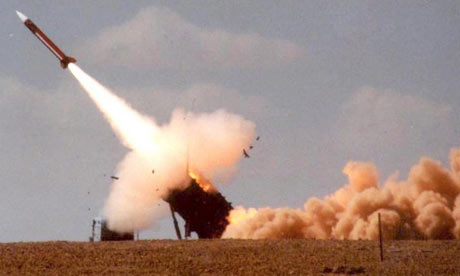
Oil and Patriots

News of a defensive buildup on the southern shores of the Gulf are coming in, together with Obama stating that they can't really stop Iran from making nukes if they really really wanted to.


Not surprisingly oil has been slowly drifting up, though the unexpected inventory buildup in the USA is putting a dampener on that. 


The haruspices closed their spread trade, and are wondering on the next stage for petroleum.
Overall, we suspect the current round of news is not enough to keep oil on the boil. The weakness in the global economy and the news from China are negatives.
But some much more dramatic news could hit the tape any time. So with december oil futures at 80~, it is not enough to take a position (apart from the usual lottery tickets - long calls at very high strike prices).
Let's wait a bit more.


Friday, 22 January 2010

Volcker is back.

So the day after the Mass. debacle, Obama finally gets it. There is only one really popular and populist trend, and it is to bash the banker.
It also happens that as well as being popular and populist, it is also very much the right thing to do.
One just has to hope that they do it right.
Volcker being on board is some consolation.
It also probably means, finally, the end of Geitner and co's. One wonders how long Bernanke can last: though his position is stronger, being less cosy to the banks, and intellectually sounder.
It beggars belief how long it has taken Obama to apprise the situation.
When Rahm said "a crisis is a terrible thing to waste", when Obama reminded the CEO's that he was the only thing between them and the pitchforks... one hoped that he understood that he had a golden opportunity to reform the financial system.
Oh well.
Hopefully he'll get to it now.
Hopefully this won't be just a re-introduction of Glass Steagall, but a strengthening and rationalization, a Glass Steagall squared.

Splitting financial institutions by function is necessary, but not sufficient.
Not just commercial and broker/dealer. Why not hiving off the settlement/payment/clearing functions completely, and treat them as a fully guaranteed utility? they are as important to our economy as electricity generation. Lending could be separated from the advisory function of investment banking. Et cetera: there is more than one way to skin a banker.

Of course, as well as reducing the risk of a full economy blowup caused by the banks as in 2008, this will severely reduce the profit generation ability of the financial sector in the boom times. That is a price worth paying, and additionally it also implies  that the "boom" will be less bubbly as well.

What else needs to be done?
Limits on the size of risk and balance sheets.
Prudential and countercyclical regulation (and maybe a bit of training  for the regulators, so that they have a chance of not getting outsmarted by the bankers).
Clear rules against bailouts of risk-taking institutions, clear guarantees and bailouts mechanisms for deposit-taking banks, and similar.
Making compensation a matter for the company owners, i.e. the shareholders, not just the board.
Forbidding discretionary payments such as dividends and bonuses when increasing debt or some leverage ratio. This should also catch the private equity pirates that sink companies by overleveraging them to pay themselves a dividend. Though it takes some serious work to do it well.

And above all, having some sensible, conservative marking rules for complex, illiquid assets.
Mark-to-market of those is a contradiction in terms (as there is no market), and it has become a ruse to use mark-to-model instead, which allows fake profits to be taken upfront, a' la champagne popping Enron. Then bonuses, and dividends, are paid out of these paper profits... Later on when the losses accrue, the salespeople/structurers/traders move on to another institution, and start the game again.
Without there paper upfront profits, a lot of the crazy derivative structures that fuelled the bubble would have never been traded.
Enough said.

So... will they get it right this time?

Sorry! no nice pictures! will try to find some later

The runes for 2010

This was written before Volcker-Obama rode into town. That deserves a blog of its own
So long since last post. In between, there has been some skiing, but also discussions with friends (who have provided the best of the ideas below, while the dodgy ones are all mine), as well as active trading in the last few days of the year recent weeks. Trading summary for 2009 will be written later in the usual place, as well as the more technical views on trading for the next term.
So the time to examine entrails is upon us again. In short, the executive summary: by end of the year we'll be in trouble. Longer term picture even worse.
Still, this year could be a very profitable one, as January has shown, assuming of course that the right approach is deployed.

Monday, 14 December 2009

Dubai: was it Smiley?


Cheers! Abu Dhabi has ridden to the rescue at the last minute (visualize elegant Arabian thoroughbreds galloping on the air-conditioned beaches of Dubai).
Enough billions have been made available to redeem at full value the Nakheel bond expiring as we speak.
Was it, after all, a clever Smiley-like operation, as we suspected it might be?
We will never know, as we will never know how much of those bonds changed hands at the distressed levels, nor who bought them.
All eyes now on Greece. No, it will not default. Nor leave the EUR. But all kind of poop might hit the ventilators before another cavalry charge resolve the day.

Clearly the Greece situation would warrant dedicated expectorations. But there again, so would High Frequency Trading, which is becoming the next bugbear. No time though.

Sunday, 13 December 2009

Bash the bankers? OK, but don't forget splitting them!

Judging from the excited cackling pervading every media, from the blogs to the tabloids, it certainly appears that Mr. Darling, the UK Chancellor, has set some kind of aggressive feline loose among the pigeons.

Pointless as it might be, here are the haruspex summary of the situation, and humble views, having read the opinions of more illustrious commentators, discussed with learned friends.

Tuesday, 8 December 2009

UK Plc and its subsidiary RBS


ERRATA: it turns out that DJ got the below wrong. the revision was not to -1.5%, but to 1.5%.
Infuriating. So a minor slowdown, within noise, which is actually quite encouraging for the good old UK manufacturing sector. Still, the market was spooked. But maybe it was something else. RBS ended down nearly 8%.
Now need to check the German number... was that wrong too?

Sunday, 6 December 2009

Fear and trembling

Terror and tremor. Yes, I am aware I am calling the name of Søren in vain.
But I am amazed at how the US stock market managed NOT to rally strongly on what were, at least by my humble measure, some bloody surprisingly good payrolls numbers, especially  given that previous 2 months were revised as well. 
In fact, they look good enough to make me seriously want to reconsider the view, now longly held, that the economy is rolling over (e.g. second derivative negative), leading to problems early next year.
It is just one number, among several others which point in the opposite direction, but an important one, so it has to be taken seriously.
I can't say that I have turned bullish (yet): but I do want to re assess and re evaluate... when the facts change... 


In the meantime, all thanks go to my historian friend who plugged my memory hole, and corrected my ignorance of philosophy. Ciao!

Thursday, 3 December 2009

let's face it: it's quiet


It's good time to catch with all those books on the "to read" pile.
It's quiet. It's dead. In the markets at least. You hear it from the trading floors, from the brokerages, from the financial journos... everybody wants to shut up shop and call it a year.

So we use this time to tidy up, enter a few more trades (see views and positions), to think, to read, to do more worthy work.

It's quiet... it's dead. Till something happens, at least.

Tuesday, 1 December 2009

Enough with Dubai


The global concerns in the markets for the Dubai are now abating. A statement (in full here) has been released which clarifies that Dubai World
is trying to restructure just 26 GUSD of debt, and that "constructive" talks are starting.
This is probably the end of the story, as far as markets are concerned.

Probably, quite rightly too. The chances of unexpected bad news coming out before XMas (the Dad's army scenario) are now very slim. Was it Smiley's? We'll never know.

Apart from the localized hit in the Gulf, equity markets are back where they were, more or less. Bonds though are still near the highs, but they were on an uptrend anyway.
Recent pieces of economic news have been tinged of a rosy hue, cancelling the mood effect of the darker ones from previous weeks.
The views then revert to what they were. Use the time to prepare for next year.

Why the picture? Well, why not?

Sunday, 29 November 2009

Dubai. Dad's army or Smiley's people?

The Financial Times mantains the line that there was amateurishness and incompetence in the way Dubai handled the recent events and it follows by recommending  Abu Dhabi to clean up the mess.
This reading of the events is plausible. Let's call it the Dad's army hypothesis.

Under this view, Dubai's autocratic rulers would not have access to professional, market savvy bankers and consultants, or if they do they would have overridden their advice. That is not impossible: the FT itself reminds us that Deutsche Bank has fled, leaving only Rothschild to advise Dubai World, one of the main entities of Dubai Inc.

This scenario though raises fears and doubts, if you are prepared to entertain the feelings of deja vu: normally when incompetence is on this scale, the worst follows soon after.
Remember Parmalat? You could tell the writing was definitely on the wall from the moment that the famous letter appeared, written in terrible English. Incompetence and amateurishness were a clear signal of the scale of the fraud to be soon revealed.
If this turns out to be the case, we should expect worse news to come out of Dubai over the next few days.
It is most  likely that a REAL panic would ensue, not the test run we saw on Thursday. All bets would be off, especially with liquidity so dire.


The other scenario, for which we have a sentimental preference (see our previous blog below or to the side) paints the Dubai operators as canny and uber-professional,  not unworthy of Smiley's best.
In this narrative, the announcement was indeed meant to feel botched, and intentionally released at the worst possible time, on the eve of Thanksgiving, during Eid, with the aim of provoking the foreign investors to rush and sell the Nakheel bond at very low levels (the excellent macroman writes they are trading below 50), in order to scoop them up on the cheap, saving a billion or so. Domestic investors would be less prone to panic, would accept the deferral till May, and be made good then.

Friday, 27 November 2009

a coffee, quick ...

This is rubbing-eyes time.
Given current illiquidity, the little prank from Dubai could just turn out to be the minor "ooops!" that sets in motion a nasty chain reaction across markets.
Especially combining it with news from Greece and from german banks.

Note though that none of the above have a direct bearing on the US: when NY stock market reopen seriously next week (today is still affected by thanksgiving absentees) it might just shrug it all off and power ahead, given that it is dominated by machines.
But the bond market is more serious, or at least is supposed to be. We should take are cues from there.
And at the moment, they suggest no shrugging off... they have moved up relentlessly, just as the short term interest rate futures.
Some comfort, and possibly a hint of smugness, might then be derived by those long OTM puts that the wise haruspices would have accumulated over the last few weeks, as discussed you know where.

One wish one could just section a chicken, and take a peep inside.

Thursday, 26 November 2009

is Dubai playing chicken?

A doubt is raised by the current news (or lack of) from the Gulf.
What game is Dubai playing? might that be a game of chicken ?
Summary:
Dubai World is asking to delay payment on ALL of its debt, includinig the convertible sukuk (the Nakheel) expirinig in a few days, 3.5 G$USD (G= 10^9=billion) .
Dubai should have received 10G$  from Abu Dhabi, in support. It received only 5... that's bad isn't it? well... Actually Dubai has drawn down only 1.

Now consider that it is Eid, a 2 week long holiday for the locals. It is also Thanksgiving, which traditionally starts the low liquidity time in most markets.

Could it be that Dubai is trying to spook the market? push down the prices of its own bonds, so as to buy them back much cheaper, maybe drawing down on those remaing 4G$? maybe using some arms-length, "unconnected" agencies...

Friday, 20 November 2009

Boring Gold

Everybody is talking about gold. Can we avoid it? It's winter, days are shortening, gold gets its eternal allure for reminding us, in our dark and damp caves, that the sun god will rise again.
Enough crap: here is the chart of the dec9 future price.

Do we buy it, do we sell it, do we steer clear?
Quite a few people are buyng:
the central bank of India recently bought 200 tonnes from the IMF, bringing its percetange of reserves held in gold to ~4%. Note that europe is said to be above 60%. Note also that the IMF has sold double that quantity.
Paulson the hedge fund manager is buying it. He has started a new fund just for the hell of it, and he himself will put at least 250 M$ of his own money (that ~7 tonnes of gold).
There are rumours that his assorted other funds might already have accumulated ~10% of their NAV in gold assets, that is ~3 G$ (3 billions dollars) i.e. ~80 tonnes of gold.
No idea whether that is believable, but if it is, and was accumulated over the last few months, it could have helped driving up the price, given the size of the market.
 Here are some numbers, courtesy of the World Gold Council:

UK NS&I pulls the amazing rates

This post, back in October, discussed how a branch of the UK government was offering a fully guaranteed 1year rate of 3.95% to savers and  investors  (up to 1 M£ per head).
We wondered what it might mean: at the same time the UK treasury rates for 1y were way lower than 1%.


The amazing offer has now been pulled:
"the 1–year and 2–year Issues of our Guaranteed Growth Bonds and Guaranteed Income Bonds were withdrawn from sale at close of business on 18 November 2009"


as the size offered has been snapped up. Alas we have been unable to find what that size was, and why those amazing rates were offered at all. No point in repeating our speculations from the aforementioned post.

Monday, 9 November 2009

A thing of beauty

Another day, another move away from the mode  "risk ON-risk OFF".
All assets rallying irrespective.
A good trading day for humans, at least some humans. Plus ca change.
One wonders how the machines are doing.
One wonders about regimes changes too,
and about gamma-squared models (I know you're dying to know more...),
and about whether finally to bite the bullet and read La Recherche.
Indeed wondering is the new panicking.